"Can you help me with math homework?" It's one of the most common questions at the kitchen table, and often the hardest. The methods kids learn today can look different from how we learned, and a 10-minute worksheet can turn into an hour of tears.
This guide gives parents a simple, calm way to help with homework maths at any grade, what 4th grade math problems usually look like, and when homework solver apps help or hurt.
Math homework help: a 4-step method for any problem
Whenever your child says "help me solve this math problem," walk through the same four steps. Over time, they'll start doing it on their own.
- Read it out loud. Ask your child to read the problem and tell you, in their own words, what it's asking. Half of all homework mistakes come from misreading the question.
- Find what you know. Underline the numbers and key words: "in all" usually means add, "how many more" means subtract, "each" often means multiply or divide.
- Pick a strategy and try it. Draw a picture, use the method from class, or try a smaller version of the problem first.
- Check the answer. Does it make sense? Round the numbers and estimate, or work backwards (check a division answer by multiplying).
Your job is to ask questions, not give answers. "What do you think comes next?" teaches far more than doing the problem for them.
Math problems for 4th graders: what to expect
4th grade is when homework gets noticeably harder. Typical math problems for 4th graders include:
- Multi-digit multiplication: 2 digit by 2 digit, like 34 × 12.
- Long division: dividing 3- and 4-digit numbers by one digit, sometimes with remainders.
- Fractions: equivalent fractions, comparing fractions, adding fractions with the same denominator.
- Word problems: two or more steps, like working out the total cost and then the change.
Worked example (a two-step word problem): "A class buys 3 packs of 24 pencils. They hand out 50. How many are left?"
- Find the total: 3 × 24 = 72 pencils.
- Take away what was handed out: 72 − 50 = 22 pencils left.
Stuck on a specific skill? See our step-by-step guides to 2 digit by 2 digit multiplication and long division at home.
Homework solvers: do they help?
Apps that help solve math problems from a photo are everywhere. Homework solvers can be useful for a parent who wants to check a method they've forgotten. But for kids, they come with a catch: copying an answer skips the thinking, and the next test has no app.
- Good use: a parent checks an answer, or looks at the steps after the child has tried the problem.
- Bad use: a child photographs every problem and copies the answer.
A simple rule works for most families: try first, check after.
Quick math hw help tips that reduce tears
- Same time, same place. A routine removes the daily argument about when homework happens.
- Start with an easy one. A quick win builds confidence before the hard problems.
- Short breaks. For ages 7 to 10, 15 to 20 minutes of focus, then a 2-minute stretch.
- Praise effort, not speed. "You checked your work, nice" beats "That was fast."
- Talk to the teacher. If homework regularly takes much longer than expected, let them know. That's useful information, not a complaint.
More ideas: My child hates math homework: 5 things that actually helped.
Build skills between homework nights
The best math homework help happens before the homework: a few minutes of practice on the days in between, so the skills are already there when the worksheet arrives.
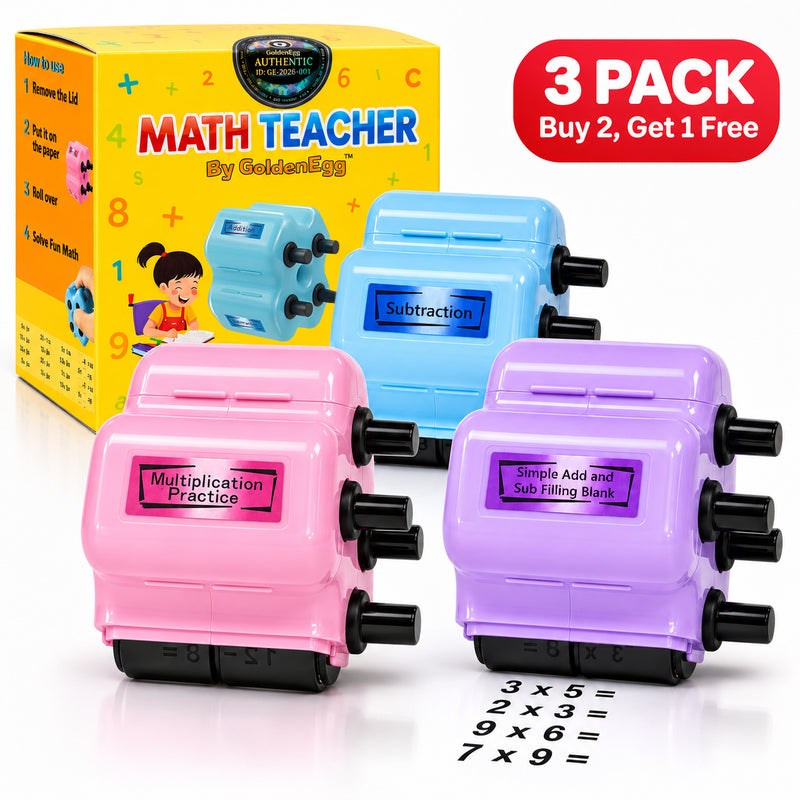
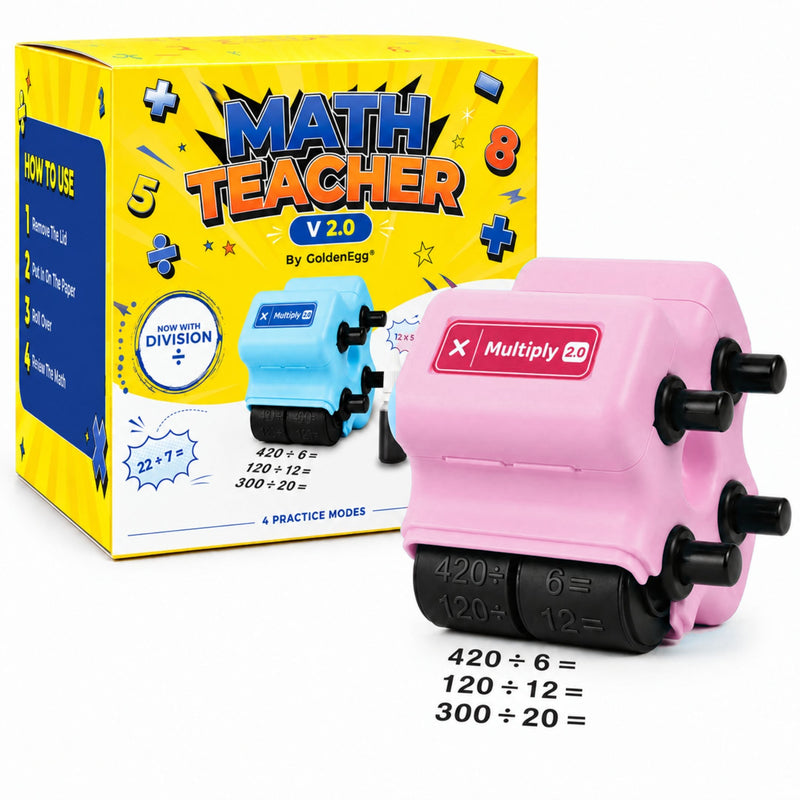
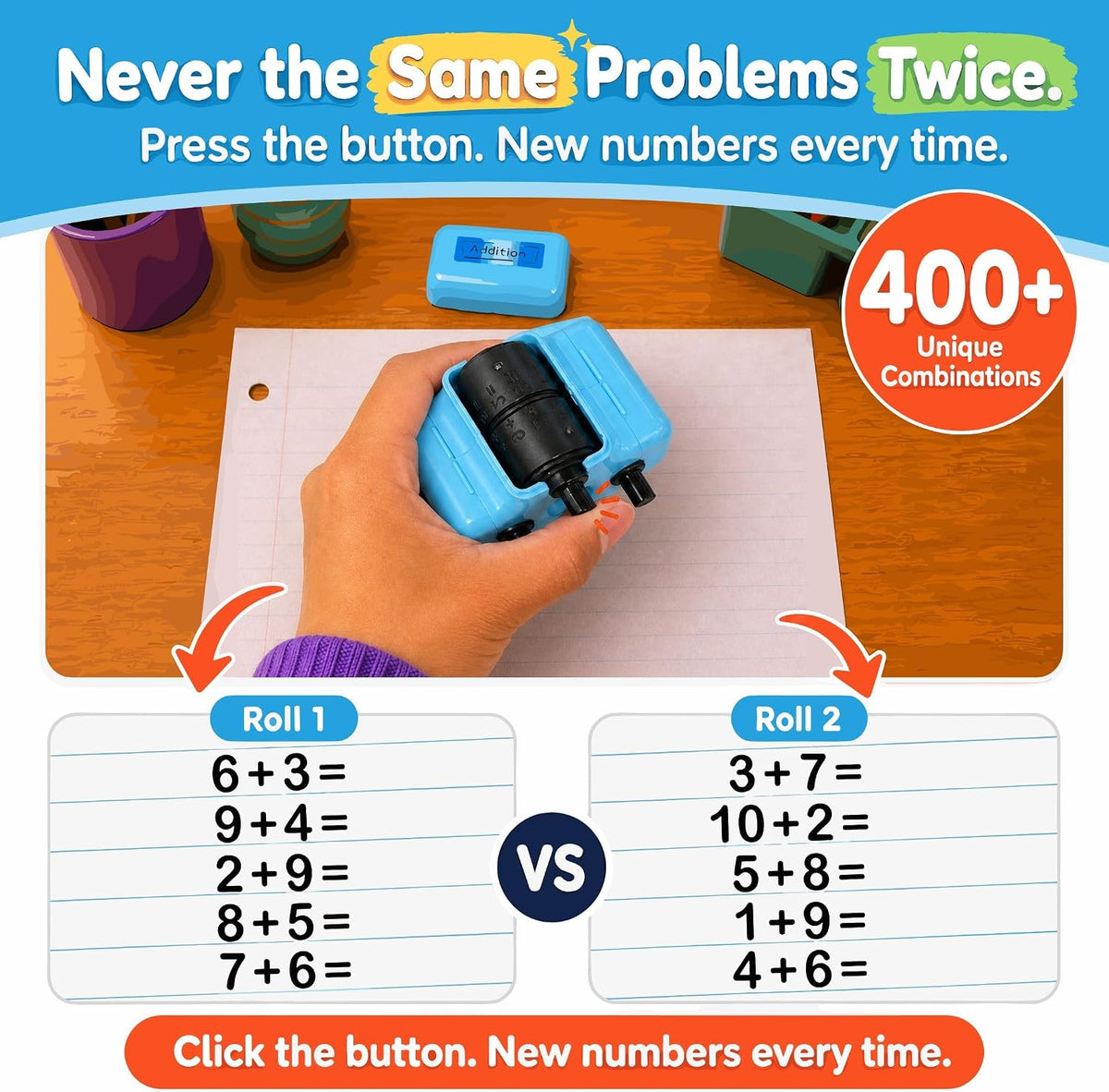
That's what Math Teacher is for. Roll the stamp down any page and it prints a fresh column of problems to solve in pencil, with new numbers every time:
- Math Teacher (Original), ages 3-8: addition, subtraction, multiplication facts and fill-in-the-blank.
- Math Teacher 2.0, ages 7-10: 2-digit addition and subtraction, bigger multiplication and long division.
Every stamp includes our free Math Help: snap a photo of your child's stamped practice page, every answer gets marked, and short video lessons show how to fix the mistakes. It's free, with no sign-up and no ads.
Frequently Asked Questions
Final Thoughts
You don't need to be a math expert to give great math homework help. Read the problem together, ask good questions, check answers, and keep practice short and regular. Calm and consistent wins every time.