2 digit by 2 digit multiplication is one of the big jumps in elementary math. Kids go from quick facts like 6 × 7 to problems like 34 × 12, with two steps, a zero placeholder and an addition at the end. The good news: it's the same few steps every time, and once they click, kids can multiply almost any pair of numbers.
This guide explains double digit multiplication in plain language, with two methods, worked examples, the mistakes kids make most, and an easy way to get fresh multiplication practice every day.
What is 2 digit by 2 digit multiplication?
It simply means multiplying two numbers that each have two digits, like 23 × 14 or 47 × 36. You'll also see it called 2 by 2 digit multiplication, 2 digit x 2 digit multiplication, or 2 digits times 2 digits. They all mean the same thing.
Most kids learn it in 4th grade, after they know their times tables up to 10 × 10. If the facts are still shaky, start there first: every 2 digit by two digit multiplication problem is really four small facts added together.
Method 1: The standard method (step by step)
Example: 34 × 12
- Multiply by the ones digit. 34 × 2 = 68. Write 68.
- Write a zero placeholder. You're about to multiply by the 1 in the tens place, which is really 10, so write a 0 in the ones place of the next row.
- Multiply by the tens digit. 34 × 1 = 34. Write it next to the zero: 340.
- Add the two rows. 68 + 340 = 408.
A harder example with carrying: 47 × 36
- 47 × 6: 7 × 6 = 42, write 2 and carry 4. Then 4 × 6 = 24, plus the 4 you carried = 28. First row: 282.
- Write the zero placeholder, then 47 × 3: 7 × 3 = 21, write 1 and carry 2. Then 4 × 3 = 12, plus 2 = 14. Second row: 1,410.
- Add: 282 + 1,410 = 1,692.
Quick check: round first. 47 × 36 is close to 50 × 35 = 1,750, so 1,692 makes sense. If your child gets 4,000 or 169, something went wrong.
Method 2: The box (area) method
Many schools teach the box method first because it shows why the standard method works. Split each number into tens and ones, multiply every part, then add.
Example: 26 × 15
| × | 20 | 6 |
|---|---|---|
| 10 | 200 | 60 |
| 5 | 100 | 30 |
Add all four boxes: 200 + 60 + 100 + 30 = 390.
If your child's homework uses boxes, stick with boxes. Once the box method makes sense, the standard method is just a faster way to write the same thing.
The 4 most common mistakes
- Forgetting the zero placeholder. This is the number one mistake. In 47 × 36, the 3 means 30, so the second row must end in 0.
- Mixing up carried numbers. Cross out each carried digit once it's used, so it doesn't get added twice.
- Shaky times tables. One wrong fact (7 × 6 = 48) spoils the whole answer. A few minutes of facts practice fixes most errors.
- Messy columns. Lined or grid paper turned sideways keeps the digits lined up.
2 Digit Multiplication Worksheets vs. Rolling Fresh Problems
Parents often search for 2 digit multiplication worksheets, two digit multiplication worksheets, or a 2 by 2 digit multiplication worksheet to print. Printed sheets work, but they run out fast, and kids soon remember the answers to the same page.
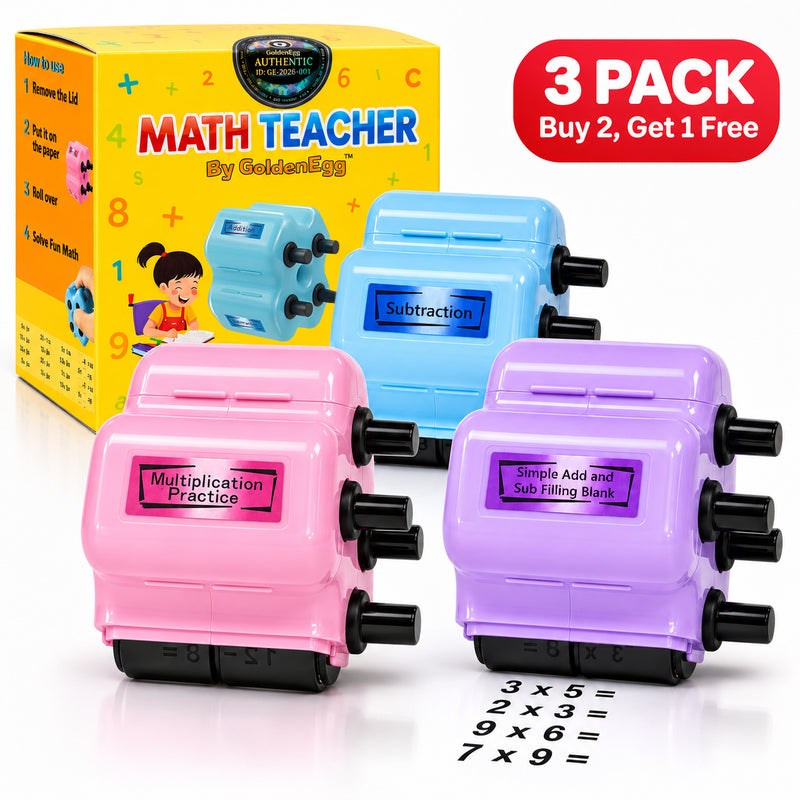
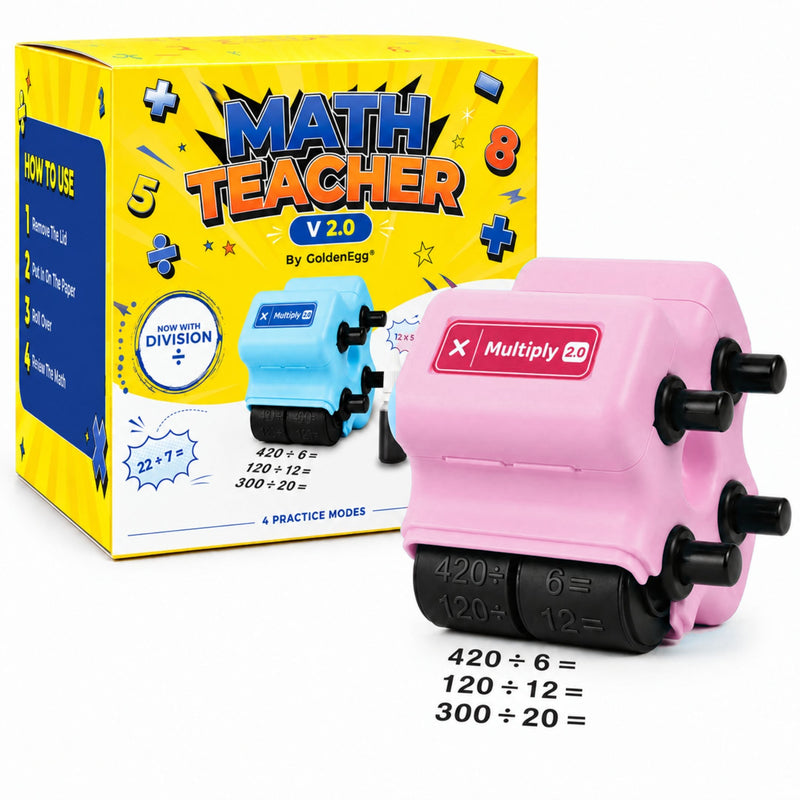
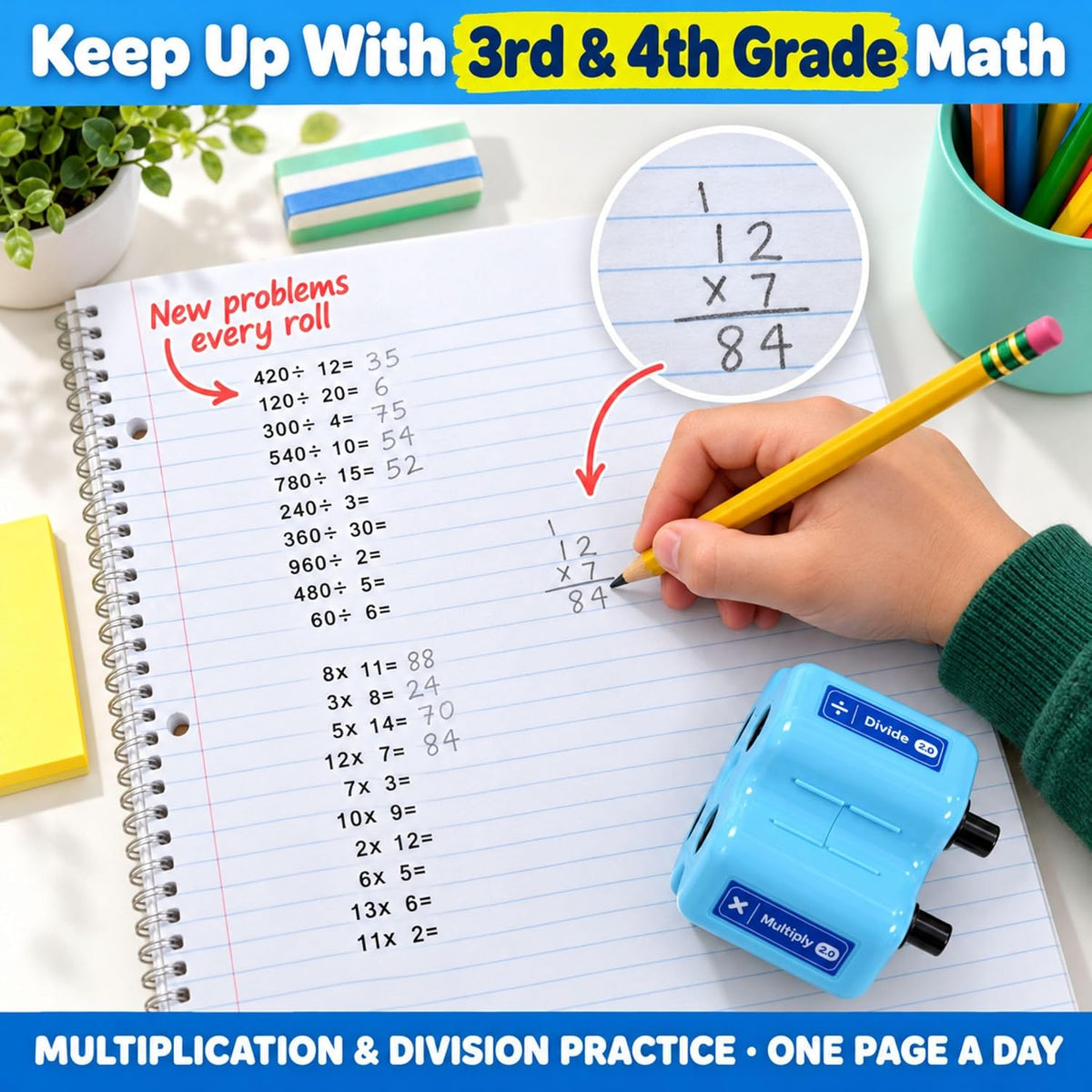
A quicker option is to roll the problems instead of printing them. Math Teacher 2.0 is a roller stamp that prints a fresh column of problems down any notebook page. Its multiplication mode rolls bigger problems like 8 × 14, 12 × 9 and 13 × 11, the exact carrying and place-value skills that 2 digit by 2 digit multiplication is built on, and it also does 2-digit addition and subtraction and long division. Press a side knob and the numbers change, so the page is new every time. No printer, no prep, and kids show their work in pencil, just like at school.
Tip: once your child is confident with the rolled problems, add a second digit yourself. Turn 13 × 6 into 13 × 26 and you have a fresh 2 digit by 2 digit multiplication worksheet in seconds.
Still working on facts? Kids looking for multiplication facts worksheets can use the Original Math Teacher (ages 3-8), which rolls single-digit multiplication facts, addition, subtraction and fill-in-the-blank.
A 10-minute daily multiplication practice routine
- 2 minutes: warm up with a few times-table facts out loud.
- 6 minutes: solve 3 to 5 freshly rolled problems (add a second digit for a 2-by-2 challenge), showing every step.
- 2 minutes: check answers by rounding, then fix any mistakes together.
Short and daily beats long and weekly. A few problems done carefully teach more than a full page done in a rush. Every Math Teacher stamp also includes free Math Help: snap a photo of the practice page and every answer gets marked.
For more 4th grade ideas, see our guide to fun math games and 4th grade math practice.
Frequently Asked Questions
Final Thoughts
2 digit by 2 digit multiplication looks hard, but it's just four small facts and one addition. Teach one method slowly, check answers by rounding, and keep multiplication practice short and regular. Within a few weeks, most kids go from nervous to confident.