How to Use a Math Roller Stamp at Home: A Parent's Guide
May 14, 2026
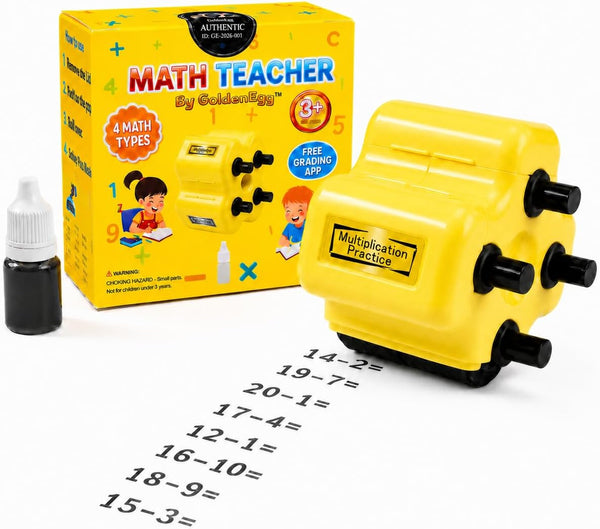
You bought a math roller stamp. Now what?
Most parents underestimate how versatile this little tool is. Used right, a roller stamp can save you 20+ minutes of homework battles every weeknight. Used wrong, it ends up in a drawer next to the flash cards you also forgot about.
Here's how parents who actually use them every day make it work — with specific routines, age-by-age guidance, and the mistakes to avoid.
Why Roller Stamps Beat Worksheets at Home
- No printer drama. No "the printer's out of ink again" moments. Just stamp and go.
- Randomization keeps it fresh. Each roll generates new problems. Your kid can't memorize the answers like with photocopied worksheets.
- It feels like play. The rolling motion taps into the same kid-brain reward circuit as Play-Doh and stickers. They actually want to do another round.
- Portable. Throws in a backpack, fits on a kitchen table, works at grandma's house with zero setup.
Getting Started: The First Week
Don't dump it on your kid and expect magic. Here's the script that works:
Day 1 — Show, don't tell
Sit down with your child. Roll out a row of problems together. Solve them together. Make a small deal of it: "Look how fast we can do this — way faster than worksheets."
Day 2-3 — Build the muscle
You stamp, they solve. Two to three rows max. Keep it under five minutes. The goal is to build the habit, not exhaust them.
Day 4-7 — Hand it over
Let them stamp their own row. Most kids enjoy the rolling motion enough that they'll do extra problems just to roll the stamp again. That's the win.
The 10-Minute Daily Routine
This is the routine recommended by parents who've made it stick:
- After-school snack first. Hangry kids don't do math. Feed them, then start.
- One operation per session. Today is addition. Tomorrow is subtraction. Don't try to cover everything in one sitting.
- One row to start (10 problems). If they're cruising, roll a second row. If they're struggling, stop at one — quality over quantity.
- Sit with them. Don't disappear into your phone. Even five minutes of "I'm here if you need me" attention dramatically improves engagement.
- Celebrate the finish. A high-five, a sticker, a "let's go on the swings" — kids respond to small immediate rewards more than abstract progress.
Age-by-Age Tips
Ages 5–6 (Kindergarten)
Start with addition only. Use single-digit problems. Solve out loud together. Use fingers, dots, or counters — let them work the way that makes sense to them. Three to five problems is plenty for a session.
Ages 7–8 (Grades 1–2)
Mix addition and subtraction. Introduce multiplication slowly. Start writing answers in pencil instead of saying them aloud. 10 problems per session is the sweet spot.
Ages 9–10 (Grade 3+)
Multiplication-heavy. Add fill-in-the-blank to make it feel like a "puzzle" rather than drill. Introduce timed challenges if your kid is competitive ("Can you do 20 problems in 2 minutes?").
10 Ways to Use a Math Roller Stamp Beyond Basic Drill
- Morning warm-up. Stamp 5 problems with breakfast. Sets the brain in math mode for school.
- Car ride math. Pre-stamp a sheet, hand it over with a clipboard for road trips.
- Sibling races. Stamp the same row for two kids, see who finishes first (with correct answers).
- "Stamp & Solve" jar. Pre-stamp problems on small slips, put in a jar. Pull one out anytime — for a sticker, a snack, screen time.
- Math-then-art. Solve a row, then decorate the page however they want. Math becomes the ticket to the fun part.
- Quiz the parent. Let your kid stamp problems for you to solve. Get a few wrong on purpose. They love correcting you.
- Birthday party station. Genuinely works as a craft station for elementary-age birthday parties — stamp & solve corner with stickers as rewards.
- Restaurant survival kit. Pack the stamp, a small notepad, and crayons. Beats a tablet at the dinner table.
- Skill review before tests. Use the week before a math test as concentrated stamp practice on the relevant operation.
- Make a "math journal." Dedicate one notebook to stamp practice. Date each page. Watch the journal fill up — visible progress is motivating for kids.
Common Mistakes Parents Make
Doing too many problems at once
Five focused minutes beats 30 minutes of drift. If your kid is whining or rushing through to finish, you've over-served. Cut the session in half tomorrow.
Using it as punishment
"You're not getting screens until you do 50 math problems" — guaranteed to make them hate the stamp. Position it as the cool tool, not the consequence.
Skipping days
The randomization advantage only kicks in with consistency. Daily 5 minutes for 30 days produces dramatically more progress than 30 minutes once a week.
Not refilling ink in time
The fastest way to break the habit is the stamp running dry mid-session. Refill the day you notice fading, not the day it stops working.
Ignoring mistakes
If your kid is consistently wrong on the same type of problem, that's a teaching opportunity — not "do more practice." Stop. Walk through it together. Then resume.
When Roller Stamps Replace Homework Help
Many teachers will accept "completed math practice" using stamps in lieu of standard worksheets, especially for daily fact-fluency assignments. Worth asking your child's teacher — most are thrilled when parents are doing extra at home.
For homeschool families, roller stamps are increasingly used as the primary fact-fluency tool. Pair with a curriculum like Math-U-See or Saxon for the conceptual side, and use the stamp for daily drill.
Frequently Asked Questions
How often should my child use a math roller stamp?
5–10 minutes daily is the sweet spot. Consistency beats intensity — short, focused sessions every day produce better outcomes than longer sessions a few times a week.
What if my child resists math practice?
Make sessions tiny (3 problems is fine), pair with something they enjoy (snack, music, sitting with a parent), and reward effort not just accuracy. The roller stamp's "play feel" usually wins kids over within a week of consistent use.
At what age should I introduce a math roller stamp?
Most kids are ready around age 5 (kindergarten) when they're starting to recognize numbers and basic addition. The 4-in-1 stamps grow with your child through about age 10 or 3rd grade.
Can a roller stamp replace a math tutor?
For fact fluency drill, yes. For learning new concepts or working through challenging word problems, no. Stamps are practice tools — they reinforce skills the child already understands.
How do I make math practice less stressful at home?
Five rules: keep sessions under 10 minutes, sit with your child, celebrate effort, use the stamp at the same time each day to build a routine, and never use it as punishment.
Which roller stamp do you recommend for parents?
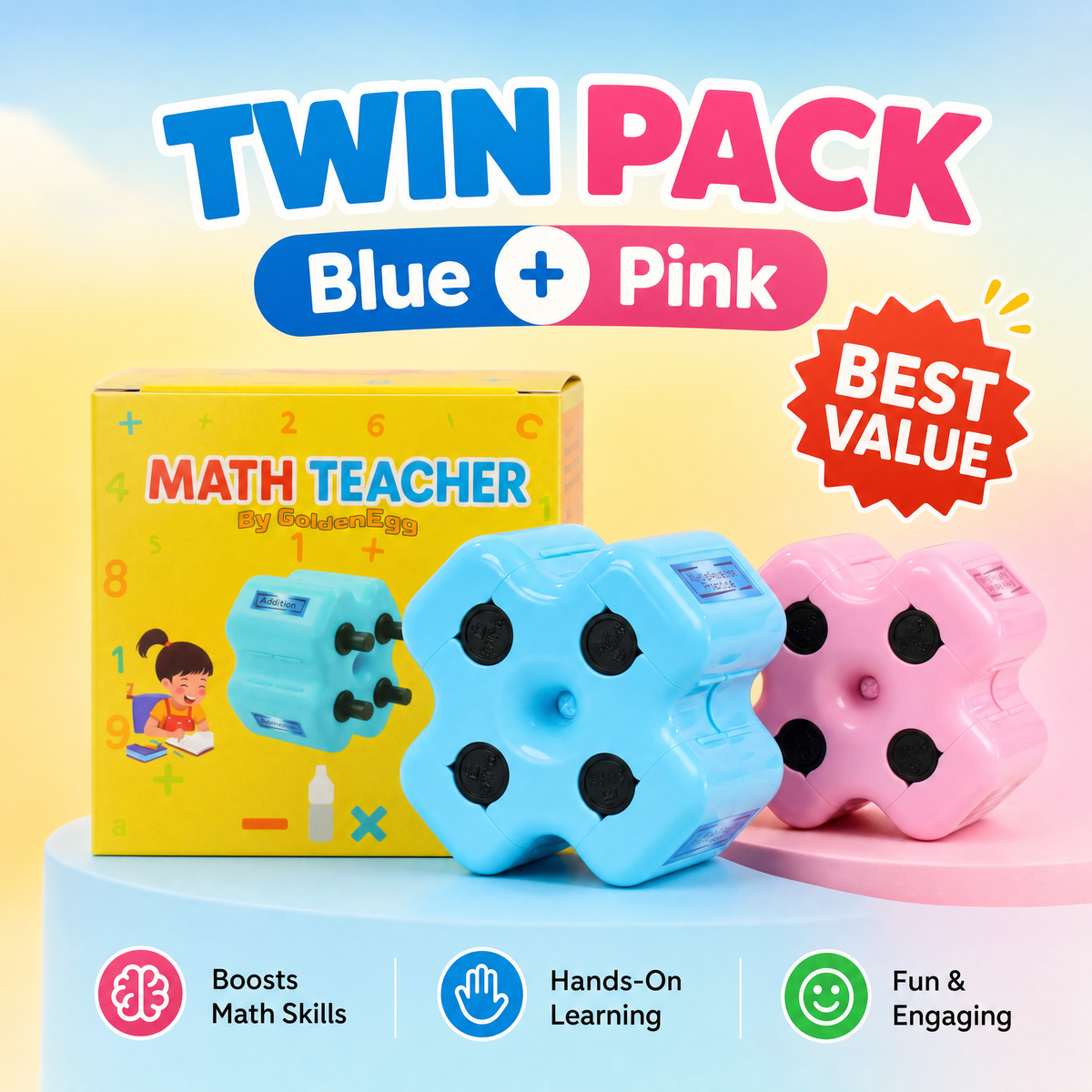
The GoldenEgg Math Teacher 4-in-1 is the most parent-friendly option — one stamp covers addition, subtraction, multiplication, and fill-in-the-blank, so you don't need to buy multiple tools as your child progresses through K–3.
Putting It All Together
A math roller stamp isn't magic — but it removes the two biggest friction points of at-home math practice: setup time and boredom from repetition. With a five-minute daily routine, most parents see real fluency improvement within 30 days.
The hardest part is just getting started. Buy one, put it on the kitchen counter where you'll see it tomorrow morning, and roll out the first row with your kid before school. The rest takes care of itself.
Get the Math Teacher 4-in-1 — From $15.89 →
Used by 50,000+ parents · Free shipping on all products · 30-day money-back guarantee