Looking for 3rd grade math practice your child will actually sit down and do? Whether you are a parent helping with homework, a homeschool educator, or a classroom teacher, a few minutes of regular practice builds strong math skills.
In this guide you will find what good math sheets for 3rd graders should cover, how to learn the 3 and 4 times tables, simple math games for kids, and a 15-minute daily routine. You will also see how to get fresh multiplication practice every day without printing a single page.
1. Math Sheets for 3rd Graders: What They Should Cover
3rd grade math introduces multiplication, division, place value, 3-digit addition and subtraction, and word problems. Good math sheets for 3rd graders mix these skills, start easy, and get a little harder as your child's confidence grows.
Parents searching for 3rd math worksheets or 3rd class math worksheets usually want the same thing: short, fresh practice every day. The catch with printed sheets is that once a page is done, it's done, and kids quickly start remembering the answers instead of working them out.
Worked example: 368 + 214
- Add the ones: 8 + 4 = 12. Write 2 and carry 1 to the tens.
- Add the tens: 6 + 1 + 1 = 8.
- Add the hundreds: 3 + 2 = 5.
Answer: 582. Ask your child to say each step out loud. Explaining the steps builds real understanding.
2. Multiplication Practice Worksheets That Never Repeat
Multiplication becomes easier with regular practice and an understanding of how numbers work together. Multiplication practice worksheets work best in short bursts: five to ten minutes a day, solved without a calculator, then checked together.
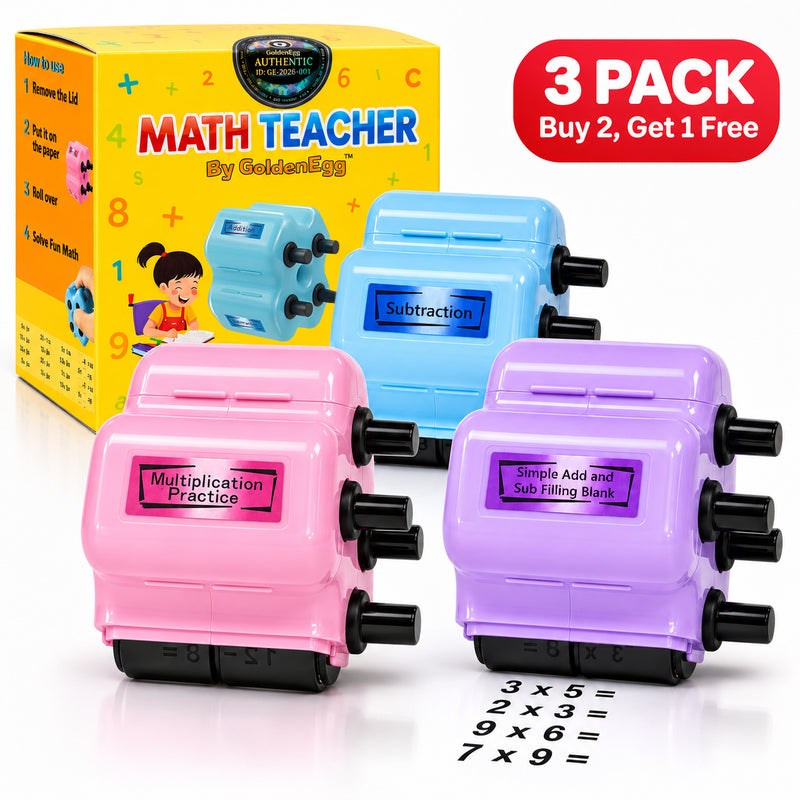
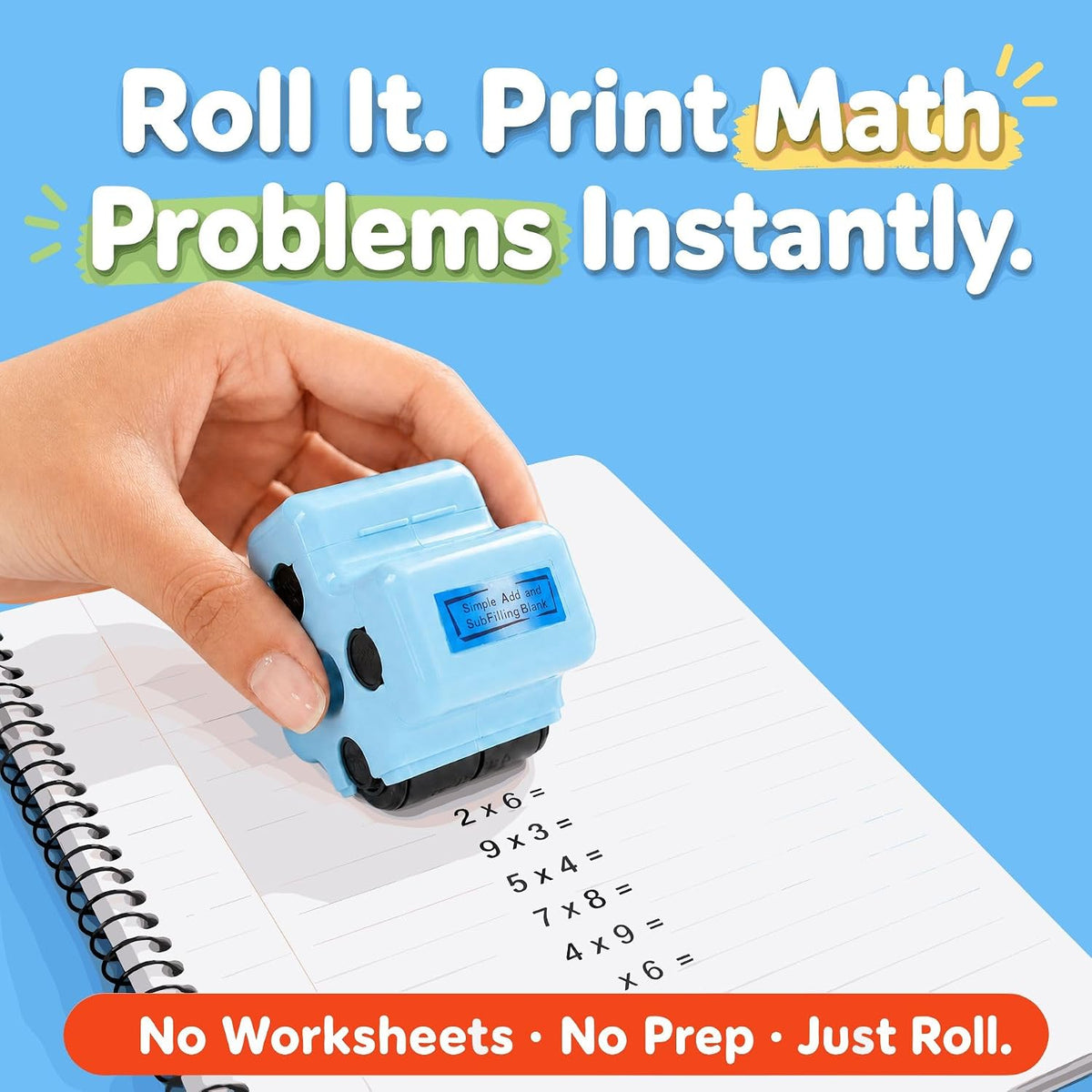
Instead of searching for new multiplication practice sheets every night, roll them. The GoldenEgg Math Teacher roller stamp prints a fresh column of multiplication facts on any piece of paper. Click the button, roll, and you get new numbers every time, with 400+ different problems.
3. Learn the 3rd Multiplication Table
The 3 times table is an essential elementary-school multiplication skill. Here it is to learn and say out loud:
3 × 1 = 3 · 3 × 2 = 6 · 3 × 3 = 9 · 3 × 4 = 12 · 3 × 5 = 15 · 3 × 6 = 18 · 3 × 7 = 21 · 3 × 8 = 24 · 3 × 9 = 27 · 3 × 10 = 30 · 3 × 11 = 33 · 3 × 12 = 36
Tip: count by threes (3, 6, 9, 12…) while clapping or jumping. Once the counting is smooth, the 3rd multiplication table follows.
4. Learn the 4 Multiplication Tables
The 4 multiplication tables are easy to learn once your child knows the 2s: multiplying by 4 is "double, then double again."
4 × 1 = 4 · 4 × 2 = 8 · 4 × 3 = 12 · 4 × 4 = 16 · 4 × 5 = 20 · 4 × 6 = 24 · 4 × 7 = 28 · 4 × 8 = 32 · 4 × 9 = 36 · 4 × 10 = 40 · 4 × 11 = 44 · 4 × 12 = 48
Example: 4 × 7. Double 7 is 14, and double 14 is 28.
5. Times Table Practice Sheets
Mixed practice helps children recall facts confidently. A good times table practice sheet mixes the 3s and 4s so kids can't just count up the column.
With the Math Teacher stamp, every roll is already mixed. Roll a column, set a timer for two minutes, and see how many your child can solve. Encourage them to explain how they found each answer rather than only memorizing.
6. Fun Math Games for Kids
Fun math turns practice into play. These math games for kids need nothing more than paper and a pencil (or a roller stamp).
- Game 1, Multiplication Challenge: roll a column of problems, give your child two minutes, then check together. Repeat on another day and try to beat the score. Focus on accuracy, not only speed.
- Game 2, Math Treasure Hunt: roll a few problems, cut them into strips and hide them around the room. Your child finds and solves each one before moving to the next.
- Game 3, Multiplication Bingo: draw a 3 × 3 grid and fill it with answers like 12, 16, 21, 24, 27, 28, 32, 36 and 48. Call out multiplication questions; children mark the matching answers. First to complete a row wins.
These math for 3rd graders games make multiplication practice feel more like play. You can also try our free Beat the Stamp mini-game on our homepage.
7. A Simple Daily 3rd Grade Math Routine
Try a 15-minute routine:
- 3 minutes: say the times tables out loud.
- 5 minutes: solve a freshly rolled column of problems.
- 4 minutes: play one of the math games above.
- 3 minutes: review mistakes and explain the answers.
Adjust for each child. Want a shorter version? See our 10-minute daily multiplication routine for 3rd graders.
8. Skip the Printing: Roll Fresh Practice With GoldenEgg Math Teacher
The GoldenEgg Math Teacher Roller Stamp is a hands-on alternative to writing out every question. Its click, shuffle and roll design prints addition, subtraction, multiplication and fill-in-the-blank practice on any paper. No worksheets, no prep, just roll. It's made for ages 3-8.
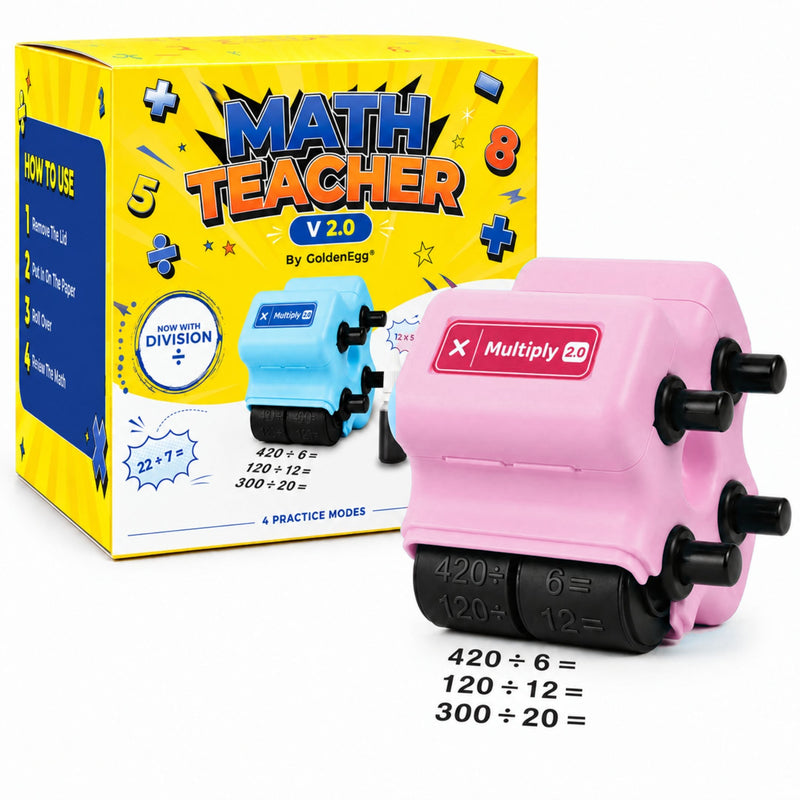
Ready for bigger numbers? Math Teacher 2.0 (ages 7-10) adds division, 2-digit addition and subtraction, and bigger multiplication. Every stamp includes free Math Help: snap a photo of the page and every answer gets checked.
Frequently Asked Questions
Final Thoughts
With the right multiplication practice sheets, times tables and fun math games, parents and teachers can build a consistent 3rd grade math routine. Start small, celebrate progress, and give children time to understand each concept.